
The Challenge: Why Change Is Needed
There are issues that prevent Mount Vernon Cancer Centre from providing effective, high-quality cancer care at the Mount Vernon Cancer Centre in Northwood:
- The current site lacks essential medical support services like A&E and intensive care to support a fully functioning specialist cancer service.
- Some treatments have been moved to other hospitals to ensure patients are treated safely. This creates fragmented and disjointed care.
- Cancer care increasingly requires input from other specialties which are not available on the current site.
- More research and trials could be available to patients if the service was on an acute hospital site.
- Some communities face longer travel times and greater difficulties accessing specialist care in Northwood.
- The buildings are not fit for purpose but rebuilding them on the current site would not solve any of the other issues.
Lack of Acute Medical Care
The needs of cancer patients have become more complex over the last 30 years. Patients now live with cancer longer, as well as having other health conditions at the same time as their cancer treatment.
Many of the newer drugs can be extremely effective but have a greater risk of side effects, so they require the back-up support of clinical teams and services that are not available on the current site. Mount Vernon Cancer Centre does not have essential medical services like A&E, intensive care, or emergency support on-site. Modern cancer treatments, especially newer drugs and complex therapies, require immediate access to these services. Without them, patients must be transferred to other hospitals when complications arise, disrupting care and delaying treatment. This will only increase as newer treatments become available.
As a result, the Mount Vernon Cancer Centre cannot offer all the newest treatments as they become available – and this will become an increasing problem. It also means patients at Mount Vernon Cancer Centre are sometimes transferred to other hospitals for part of their treatment. This makes it very difficult for their Mount Vernon Cancer Centre oncologists to manage their care.
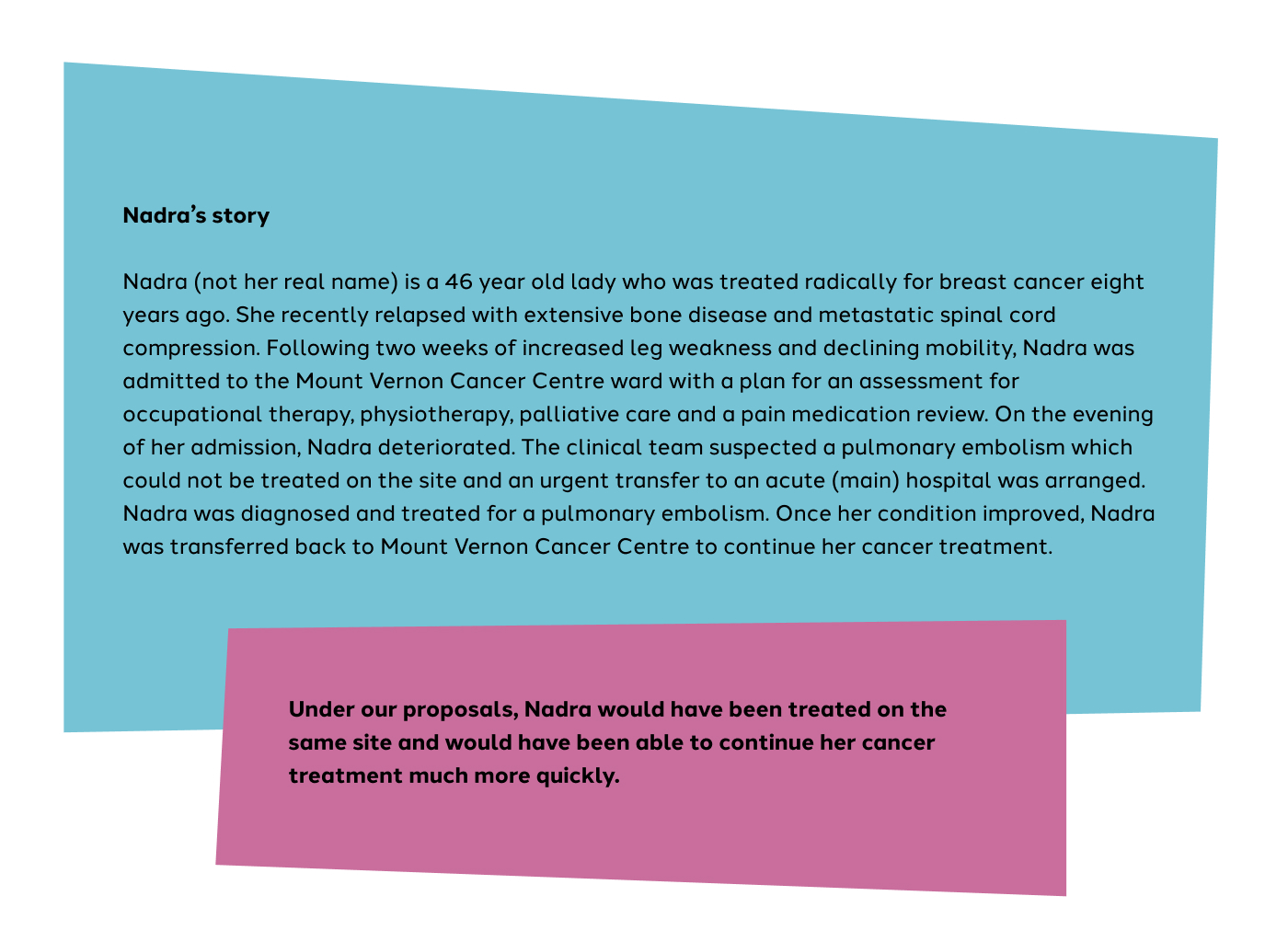 *These illustrated scenarios are based on real patient experiences at Mount Vernon
Patients with blood cancers are no longer seen at the cancer centre because of the lack of supporting clinical services on the site. Many of these patients are now being treated at UCLH in central London, or other specialist centres, with some non-specialist treatment continuing at local hospitals.
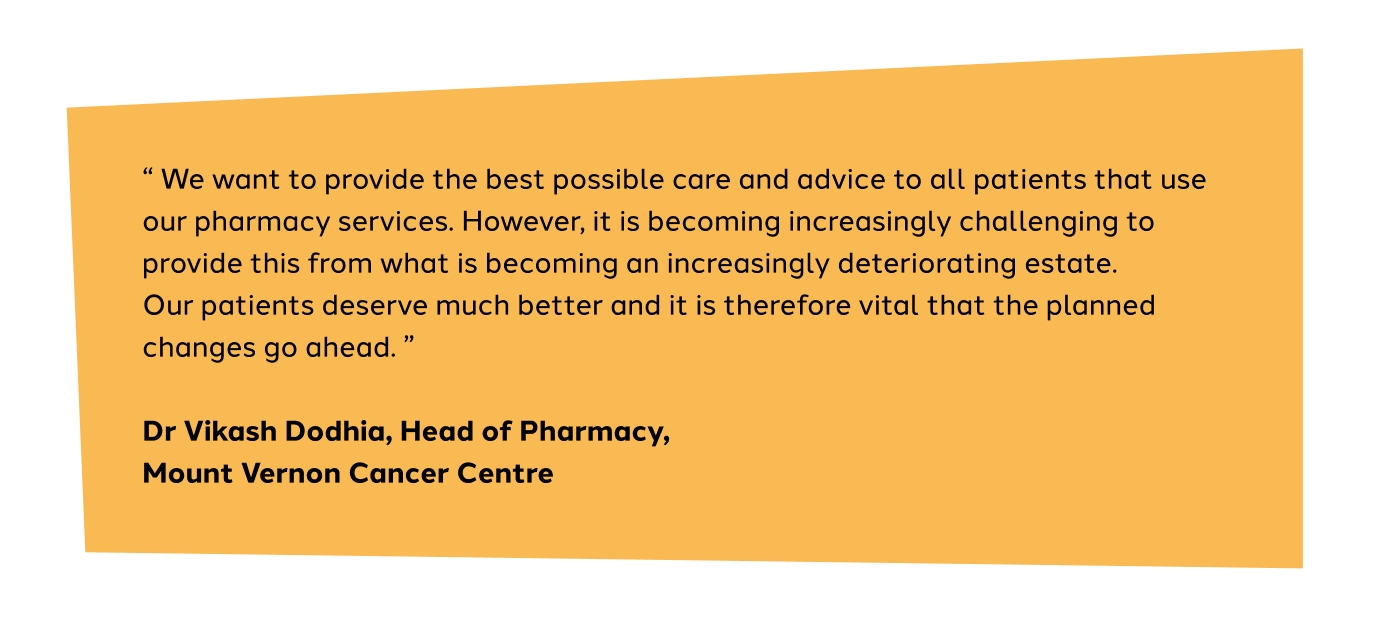
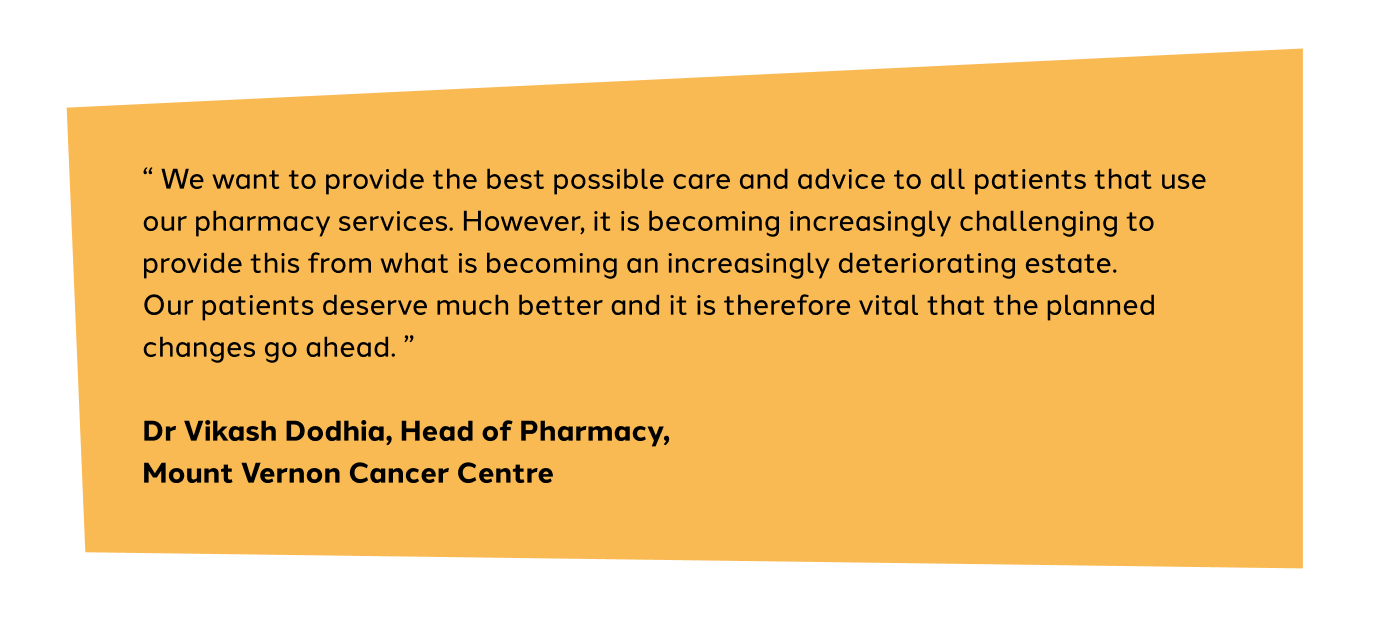
The staff at Mount Vernon Cancer Centre are well regarded and are doing what they can do well. However, they are not able to deliver all the services a regional specialist cancer centre should be able to. Staff have told us they want to treat more complex patients at the cancer centre and offer new treatments, to provide the best possible service for patients and develop their skills and expertise. There is a risk that Mount Vernon Cancer Centre will not be able to recruit and retain specialist staff if a long-term solution is not agreed.
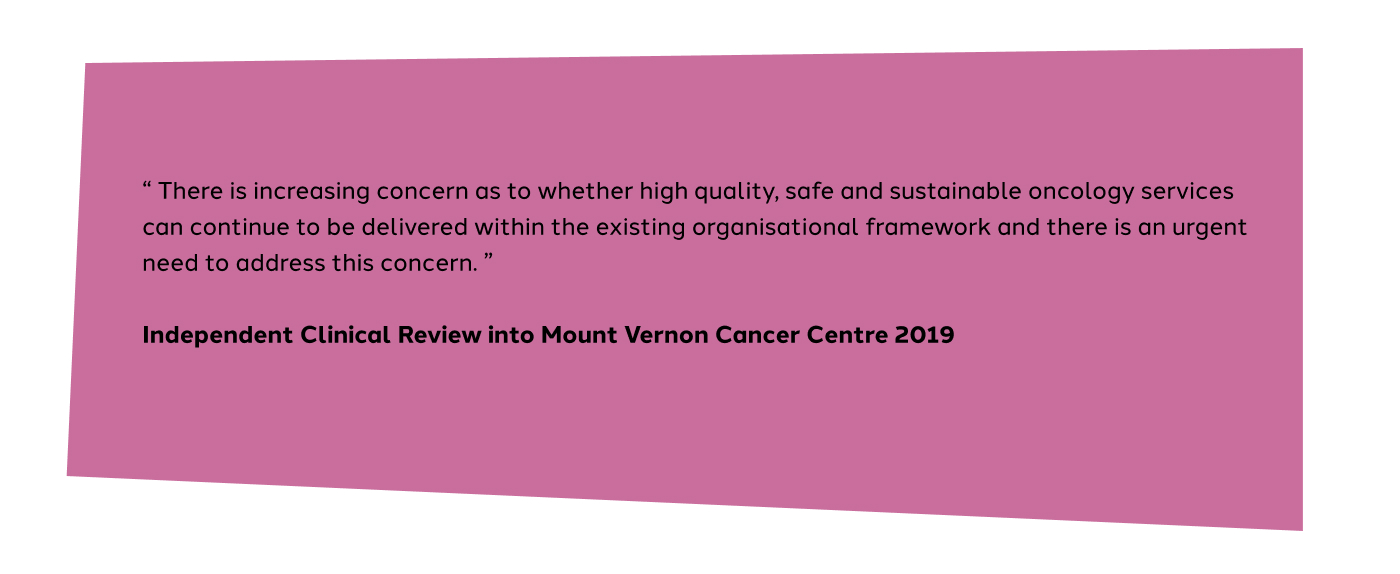
There have been a series of reviews of Mount Vernon Cancer Centre over more than 40 years, which have said that significant changes are needed, however previous proposals have not been able to progress.
As a result, the need for change is now more urgent. More information can be read on the Lack of Acute Medical Support on page 24 of the Consultation Document.
Improving Outcomes
Cancer outcomes vary widely across the Mount Vernon Cancer Centre catchment area, and in some places they are below the national average.
Many patients, especially those living in rural or more deprived areas, face long, difficult journeys to Mount Vernon Cancer Centre. Some people have told us they travel more than 100 miles in a single day for blood tests, swabs, PICC line care or to collect medicines.
Our area is diverse and includes communities with high levels of deprivation, rural populations, areas with older populations, and a wide range of ethnic backgrounds. These factors all influence people’s ability to access cancer services and affect their outcomes.
One-year cancer survival in our area ranges from 69.3% in Luton to 78.3% in Barnet. Five-year survival is also lower in the East of England compared with London. There are also health inequalities in the south east of England. For example, life expectancy in Slough is lower than average for both England and the south east. The main causes of illness and early death include heart disease, cancer and respiratory conditions. Some areas also have higher levels of poverty than the surrounding regions.
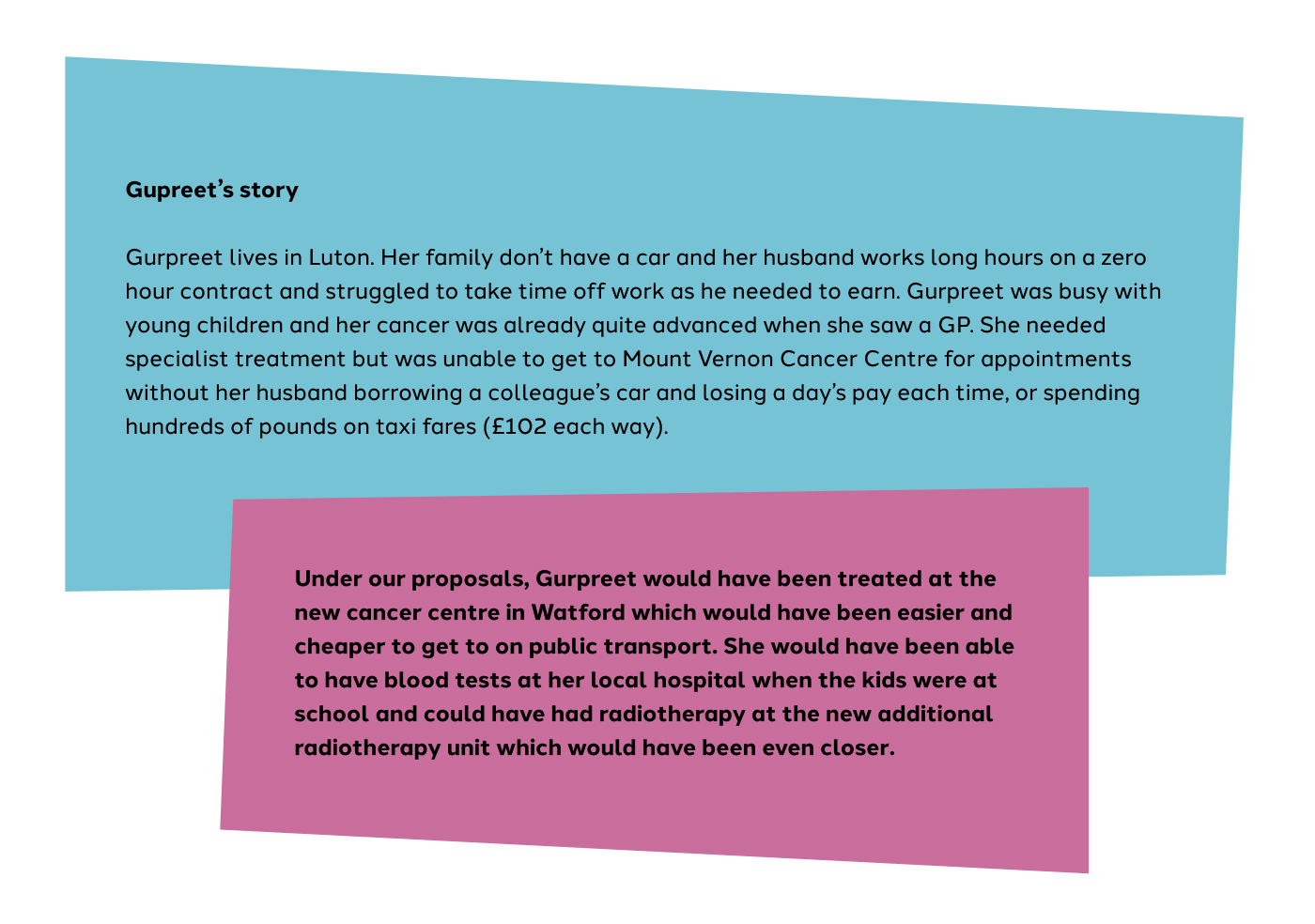 *These illustrated scenarios are based on real patient experiences at Mount Vernon
Deprivation is closely linked to poorer health. Across England, cancer mortality rates for both men and women in the most deprived areas are at least 53% higher than in the least deprived areas. While some parts of the Mount Vernon Cancer Centre catchment are relatively affluent, others, such as Luton and Slough experience high levels of deprivation and poorer socio-economic conditions, which are linked to worse health outcomes and mean some communities may face greater barriers to accessing care. Nationally, people in the most deprived areas of England have substantially lower life expectancy than those in the least deprived areas.
For some ethnic minority groups, poorer cancer outcomes are linked to a higher prevalence of certain conditions, combined with deprivation and barriers to accessing services that can delay diagnosis and treatment. People living in our area come from a wide range of ethnic backgrounds, with black and minority ethnic populations of around 10% in east and north Hertfordshire, to around 65% in Brent.
Our population is also growing quickly. Census data shows that Bedford Borough, Central Bedfordshire, Watford and Luton saw more than 10% population growth between 2011 and 2021. The number of people aged over 90 is expected to rise sharply – by 105% in Central Bedfordshire and 82% in Bedford Borough over the next 20 years.
More information can be read on Research Opportunities on page 29 of the Consultation Document.
Research Opportunities
Cancer survival is improving. Although more people are being diagnosed with cancer, fewer people are dying from it.
This shows how important new treatments, clinical trials and earlier diagnosis have become. To keep improving outcomes, we need facilities that can support the latest advances in cancer care to give people the best chances of survival and recovery. Mount Vernon Cancer Centre has a strong history in cancer research and was once a world leader in developing new treatments. The centre still delivers valuable research today, but the current site limits the team’s ability to offer cutting-edge treatments and take part in trials. The cancer centre has had to turn down some complex trials and treatments because of the lack of supporting facilities.
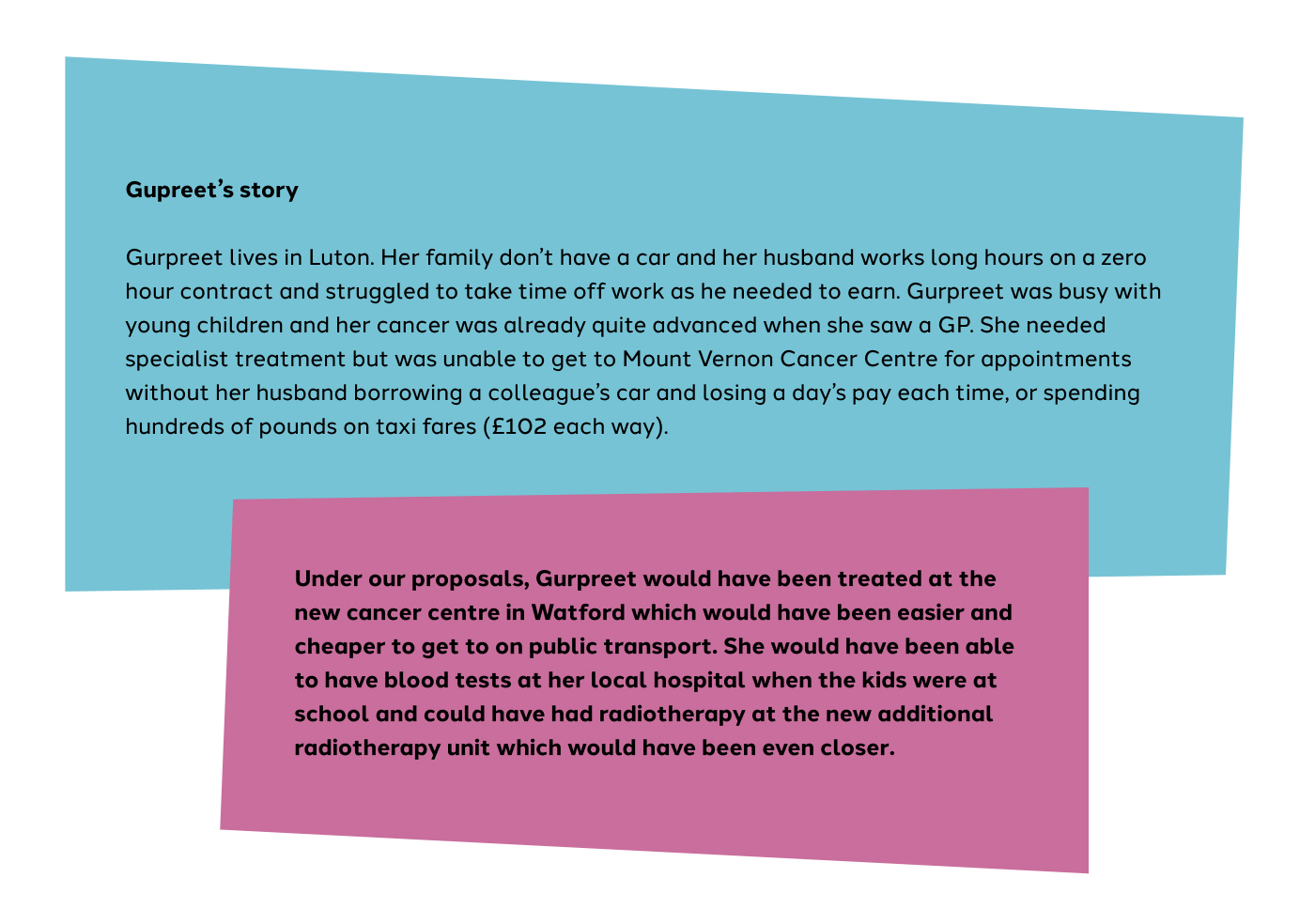 *These illustrated scenarios are based on real patient experiences at Mount Vernon
Cancer research is changing quickly. For example, England’s population is ageing – most cancers occur in people over 50, and this age group is growing. New forms of radiotherapy and immunotherapy are being developed specifically to help older patients who may not be able to undergo surgery. But these treatments often require rapid access to critical care and other specialist services, which the current site cannot provide.
Working in partnership with UCLH in a new, purpose-built cancer centre next to an acute hospital (Watford General) would create major new research opportunities. It would allow staff and patients to take part in more clinical trials, including the newest and most complex ones, and give patients quicker access to cutting-edge treatments.
More information can be read on Research Opportunities on page 34 of the Consultation Document.
How we got here
Over the last few years, we have involved patients, carers, clinical staff and other stakeholders in working out what the best solution is for the future of these services. We will continue to work with patients, carers, stakeholders and staff as we develop the proposals.
Patient engagement has been taking place since the review began in July 2019. Patient and carer views have informed every step of the development of options.


